What to Wear and Pack for a Jungle Buggy Tour
Dress in quick-dry clothes you are happy to ruin, closed water shoes, and swimwear worn underneath, then carry everything in a small waterproof bag. That single outfit covers the two halves of a Riviera Maya trip: bouncing through muddy jungle trails in an off-road buggy, and swimming in a cool cenote afterward. Smart jungle buggy tour packing is about choosing gear that survives mud, dust, heat, and water in one afternoon.
This guide walks through clothing, footwear, swimwear, sun and bug protection, and a short checklist for your day bag so you arrive ready and leave nothing behind.
What Clothing Handles Mud, Dust, and Jungle Heat?
Wear the lightest, fastest-drying clothes you own, and expect them to get filthy. An open buggy throws up mud and fine trail dust the moment the wheels start turning, so anything you wear will be stained by the end. Synthetic athletic fabrics shed dirt and dry quickly, while cotton soaks up sweat and stays heavy in the humidity.
A short-sleeve moisture-wicking shirt and quick-dry shorts are the core kit. Many drivers also bring a thin long-sleeve layer. It sounds odd in the heat, but it shields your arms from sun and from branches along narrow jungle tracks. Choose darker colors or patterns that hide dust better than white.
Leave the nice clothes at the hotel. Pack an old outfit for the ride and a clean, dry change for the trip home. If you tour with Buggynative, the trail mixes open sun with shaded canopy, so a breathable top you can splash water on keeps you comfortable across both.
For a fuller sense of trail conditions and pacing, see our guide on what to expect from a jungle buggy adventure in Mexico.
Which Footwear Works for Off-Road Driving and Cenote Swimming?
Pick closed water shoes with a secure strap, because they are the one item that has to do two jobs at once. Your feet work the pedals and brace against rough terrain while driving, then meet slick limestone and submerged rock at the cenote. A single pair of grippy, quick-draining shoes handles both without a mid-tour change.
Flip-flops are the wrong call. They slide off on the pedals, offer no toe protection on rocky ground, and float away the instant you swim. Secured sport sandals with a heel strap work, but closed-toe water shoes give the best mix of protection and grip on wet stone.
Whatever you choose, it will get soaked and muddy. Rinse it in the cenote water at the end, let it drip on the ride back, and it will be close to dry by the time you reach your hotel.
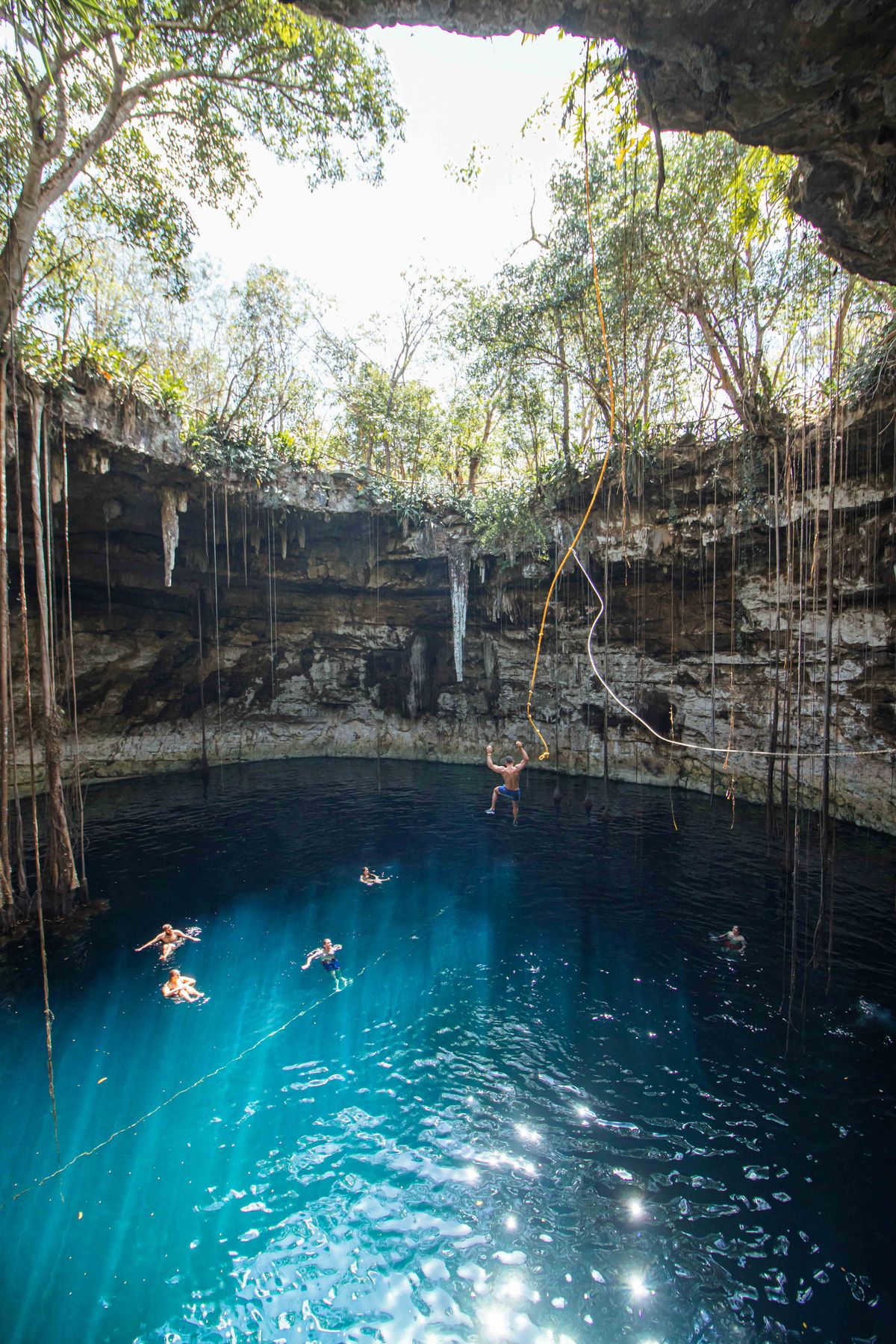
What Swimwear and Quick-Dry Essentials Do You Need for the Cenote?
Wear your swimsuit under your clothes so you can jump into the cenote without hunting for a changing room. Most jungle tours move straight from the trail to the water, and facilities on site are basic. Swimwear on underneath means you simply strip off your muddy outer layer and swim.
Add a quick-dry microfiber towel, which packs down small and dries far faster than a cotton beach towel. A rash guard or swim shirt is worth considering too. It adds sun cover on your back and shoulders during a long float, which is where many visitors burn.
Bring a plastic or dry bag for the wet clothes afterward. Nobody enjoys a muddy, soaked bundle sitting loose in their day pack on the drive home. A single sealable bag keeps the rest of your gear dry.
How Should You Handle Sun, Bugs, and Reef-Safe Sunscreen?
Pack mineral, reef-safe sunscreen and strong insect repellent, because the Yucatan delivers intense sun and a real mosquito load. The chemical filter oxybenzone appears in more than 3,500 skin care products worldwide and damages developing coral, which is why Mexico's cenotes and eco-parks increasingly restrict it (NOAA National Ocean Service, 2016). Many cenotes in Quintana Roo require biodegradable or mineral sunscreen, and some ban sunscreen entirely with a mandatory pre-swim rinse.
Choose a zinc or titanium mineral formula and apply it before you leave, so it binds to your skin and sheds less in the water. A wide-brim cap and sunglasses also cut glare and block flying trail debris while you drive.
Bugs are the other concern. The CDC lists dengue as endemic throughout central and southern Mexico, with peak transmission from May to November, and advises travelers to use insect repellent and cover exposed skin (CDC Yellow Book 2026, 2026). The mosquitoes that spread it bite during the day, so apply repellent in the morning, not just at dusk. Reapply any repellent after you swim.
What Belongs in Your Jungle Buggy Tour Packing Day Bag?
Carry a compact dry bag holding water, ID, a little cash, and a tethered camera, and leave everything else behind. Jungle buggy tours are messy and physical, so the less you bring, the less you can drop on the trail or lose in the water. A small sealable bag protects the essentials from mud and splashes.
Here is a short checklist for the day bag:
- Water: at least one liter per person for a hot, humid half-day. Dehydration creeps up fast in the Yucatan heat.
- Photo ID: a copy or your actual card, as some sites and transfers ask for it.
- Cash in pesos: small bills for tips and any on-site extras, since card readers are rare on the trail.
- Reef-safe sunscreen and repellent: travel sizes for reapplying.
- Quick-dry towel and a bag for wet clothes.
- GoPro or action camera: use a float strap or wrist tether. A phone in a waterproof pouch works too, but a secured action camera survives mud and water better.
Keep the bag light. Guides usually provide secure storage on the buggy, but a strap-closed dry bag you can clip on means your hands stay free for driving and swimming.
Pack for the Mess, Then Enjoy the Day
The visitors who have the best time are the ones who show up expecting to get dirty and wet, dressed for exactly that. Lay out your outfit the night before: quick-dry clothes, water shoes, swimwear underneath, and a dry bag loaded with the checklist above. Add your mineral sunscreen and repellent on top so you cannot forget them at the hotel.
If you are still choosing a tour, confirm what the operator supplies, such as helmets, water, or storage, so you only pack what you actually need. Then book your spot, set the alarm, and leave room in your memory card for the cenote.
Frequently asked questions
What should I wear on a jungle buggy tour in the Riviera Maya?
Wear lightweight, quick-dry clothing you do not mind getting muddy, closed water shoes with a secure strap, and swimwear underneath for the cenote. Add a cap and sunglasses for sun and flying debris.
Do I need special shoes for a buggy tour with cenote swimming?
Yes. Choose closed-toe water shoes or secured sport sandals with grip. They protect your feet on the pedals and off-road trail, then handle slippery cenote limestone without falling off when you swim.
Can I wear regular sunscreen at a cenote?
Often no. Many cenotes and eco-parks in Quintana Roo require biodegradable or mineral sunscreen, and some ban it entirely with a pre-swim shower. Chemical filters like oxybenzone harm coral and freshwater ecosystems.
What should I pack in a small bag for a jungle buggy tour?
Pack water, a photo ID, small cash in pesos for tips, reef-safe sunscreen, insect repellent, a quick-dry towel, and a tethered action camera. A compact dry bag keeps everything safe from mud and water.