Cenote Swimming Safety Tips for First-Timers
Cenote swimming safety comes down to four habits: wear the life jacket your guide hands you, use reef-safe sunscreen, stay inside the marked area, and ease in slowly because the water is cooler than the sea. Do those and a first-time cenote swim is one of the calmest, clearest swims you will ever have. This guide walks first-timers through what to expect in the water, how deep these sinkholes really go, how to protect a fragile ecosystem, and how nervous or non-swimmers can enjoy the experience without stress.
What a Cenote Is, and Why the Water Runs Clear and Cool
A cenote is a natural sinkhole formed when limestone bedrock collapses and exposes the groundwater below. In the Yucatan, that water is rain filtered slowly through porous rock, which strips out sediment and leaves it startlingly clear. Visibility in a clean cenote stretches tens of meters, far beyond anything you get in the open ocean.
The water is also noticeably cool. Because groundwater is buffered from the weather above, cenote temperature holds fairly steady all year and runs cooler than the nearby sea. After a hot buggy ride through the jungle, that first step in feels brisk. Give your body a few seconds to adjust rather than jumping straight into the deep center. Lower in from the steps, let your breathing settle, then start to swim.
Why does clarity matter for safety? Clear water tricks your depth perception. A pool that looks shoulder-deep can drop well past your reach. That single fact drives most of the advice below.
Cenote Swimming Safety: How Deep Are They and Do You Need a Life Jacket?
Depth varies enormously, which is exactly why a life jacket is standard. Some cenotes are gentle, shallow pools. Others plunge many meters down, with underwater passages that connect to vast cave systems. You usually cannot tell by looking, because the clarity that makes cenotes beautiful also hides how far down the bottom sits.
Wear the life jacket your guide provides, even if you are a strong swimmer. It keeps you floating comfortably while you look around, saves energy on longer swims, and gives you an easy rest if a leg cramps in the cool water. At Buggynative, guides fit each guest with a jacket and point out the safe swimming zone before anyone enters the water, so you always know where the edges are.
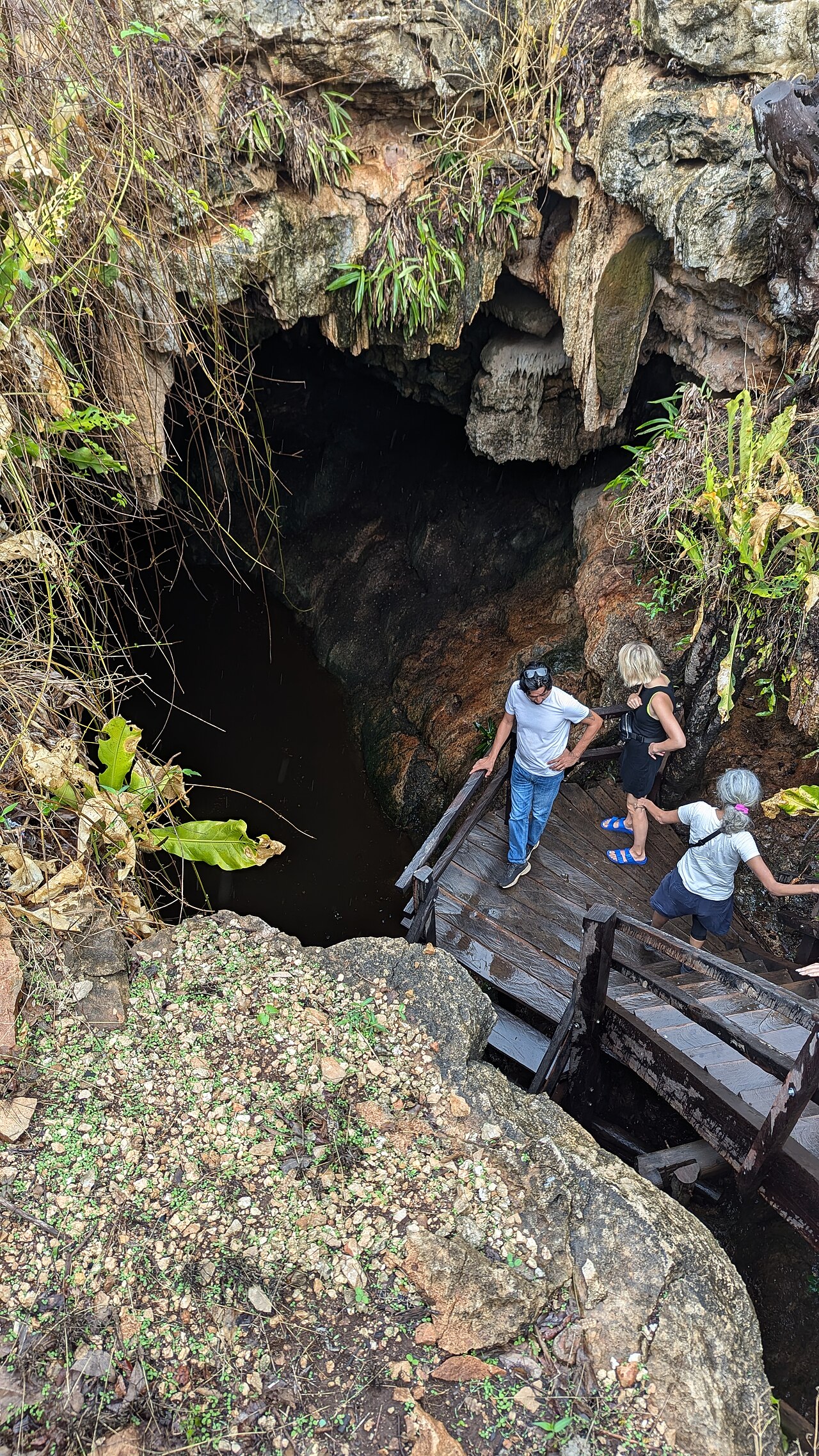
A few depth habits worth building:
- Always enter feet-first from the steps or a ladder, never head-first, because you cannot judge the bottom or spot hidden rock through the clear water.
- Stay inside the marked swimming zone. Keep well clear of any roped-off cave openings.
- Know your exit. Glance back at the entry point now and then.
- Tired? Roll onto your back and let the jacket float you while you catch your breath.
Packing the right gear ahead of time makes all of this easier. Our guide on what to wear and pack for a jungle buggy tour covers swimwear, water shoes, and a dry bag for your phone.
How Do You Protect a Cenote's Fragile Ecosystem?
Cenotes feed the Yucatan's underground aquifer, the same water that local communities drink, so anything you bring into the water can spread far beyond the pool. The limestone formations above and below the surface took thousands of years to grow, and a single careless touch can snap a feature that will never regrow in your lifetime. Treating a cenote gently is part of swimming in one safely.
Keep these rules in mind:
- Do not touch, stand on, or hang from stalactites and rock formations.
- Rinse off sunscreen, bug spray, makeup, and hair product in a shower before you get in.
- Leave nothing behind: no food, no bottles, no cigarette ends.
- Avoid stirring up the silty bottom, which clouds the water for everyone.
Rinsing before you enter matters more than most visitors realize. Whatever is on your skin washes straight into the aquifer, so arriving clean is one of the simplest things you can do for the ecosystem and the next swimmer.
Why Reef-Safe Sunscreen Matters and What Not to Wear
Standard sunscreen chemicals are genuinely harmful in water this sensitive. Oxybenzone, a common UV filter, can damage coral at concentrations as low as 0.042 parts per million, roughly a few drops in a large swimming pool, and an estimated 8,000 to 16,000 tons of sunscreen wash into the world's reefs every year (Sustainable Travel International, 2025). Most of it rinses off skin rather than absorbing into it, so what you wear into the water ends up in the water.
Many protected areas in the Yucatan now require biodegradable, reef-safe sunscreen and turn away visitors wearing banned products. Before your trip, check the label and avoid oxybenzone and octinoxate. Better still, cover up with a rash guard or t-shirt and a hat, which protects your skin without putting any chemicals in the water at all.
What to leave off entirely before a cenote swim:
- Any sunscreen, insect repellent, or lotion that is not clearly labeled biodegradable and reef-safe. If in doubt, leave it off and cover up instead.
- Makeup, hair gel, and heavy fragrance. They all rinse straight into the water.
- Loose jewelry. It can slip off and sink out of reach.
Pack a reef-safe sunscreen at home so you are not forced to buy an unverified product on the day. If you want the full picture of the trip itself, from the buggy ride to the swim, our complete guide to a Riviera Maya buggy tour ties it all together.
Tips for Nervous Swimmers and Non-Swimmers
You can enjoy a cenote without being a confident swimmer. Cenotes have no waves, no tide, and no current, so the water stays flat and predictable. Combine that calm with a life jacket and you have a setting that is far easier than a beach or a pool with other swimmers churning around you.
If the idea of deep water makes you tense, try this approach:
- Tell your guide before you start. A good guide will stay close and point out shallow spots and rest points.
- Get in from the steps and hold the ladder or edge until your breathing is calm.
- Float on your back in the life jacket first. Feel how well it holds you up before you go anywhere.
- Stay near the entrance. There is no rule that says you must swim to the middle.
- Go at your own pace. Watching the light and fish from the edge still counts as a cenote swim.
Breathing is the thing that trips up nervous first-timers. The cool water can make you gasp, which feels like panic but passes in seconds. Slow, steady breaths through the nose settle it quickly. Knowing what the rest of the day holds also takes the edge off, so ask your guide to walk you through the itinerary before you reach the water.
Before your tour, buy a reef-safe sunscreen, pack a rash guard, and plan to rinse off at the site. Those three small steps cover the biggest safety and environmental risks, and they let you focus on the part that matters: floating in some of the clearest water on earth.
Frequently asked questions
Is cenote swimming safe for people who cannot swim?
Yes, with a life jacket and a guide. Cenotes have no waves or current, and most have steps, shallow edges, and rest spots. Non-swimmers can float near the entrance without going into deep water.
How cold is cenote water?
Cenote water stays cool and steady all year, fed by filtered groundwater. It feels refreshingly cool against warm jungle air, but it is not cold enough to be a shock for most swimmers.
Do I need special sunscreen for cenotes?
Yes. Use reef-safe, biodegradable sunscreen free of oxybenzone and octinoxate, and rinse off any product before entering. Many Yucatan protected areas require this to protect the aquifer and marine life.
How deep are cenotes?
It varies widely. Some are only a few meters deep, while others plunge far down into connected cave systems. The water is so clear that depth is hard to judge, which is why guides have you wear a life jacket.